The Written Word: How Calligraphy Slipped Onto Luxury's Most Considered Objects

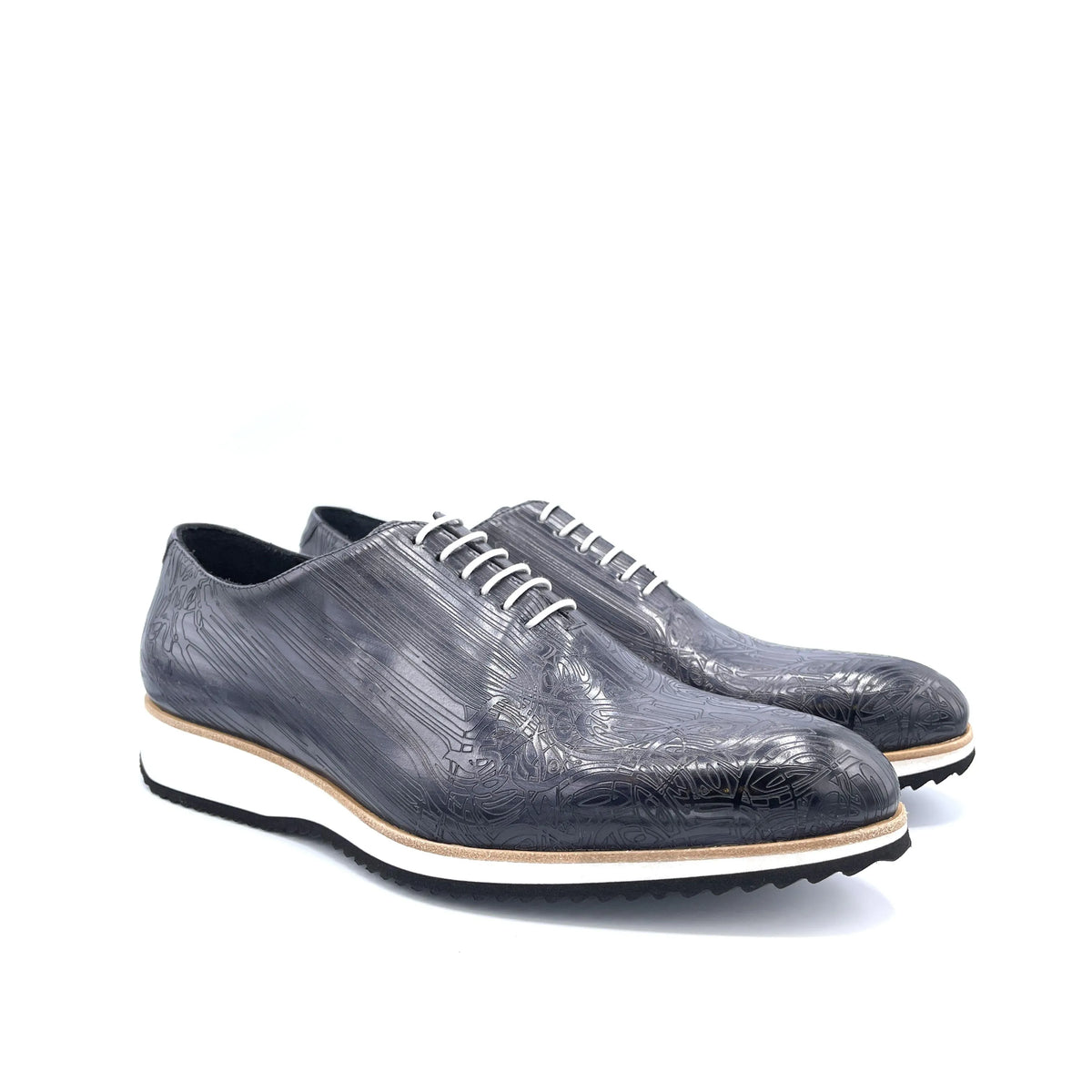
There is a moment, usually around the second glass of wine, when a man will lean down at a dinner and quietly turn his foot to the light. He is not checking for a scuff. He is showing you something written on his shoe — a word, a name, a line of verse rendered in ink and burnished leather. This is a relatively new gesture in menswear, and a telling one. For most of the last century, a gentleman's shoes were prized precisely for saying nothing. A black cap-toe Oxford was a form of discretion you could walk in. Now the most quietly confident men are letting their shoes speak — literally.
Calligraphy has crept into luxury from the edges, and it has done so with remarkable speed. What began as logomania — brand names blasted across handbags and hoodies — has matured into something more interesting: the return of the written word as ornament, craft, and personal signature. To understand why a man might want a line of script curling across his instep, you have to understand how deep the marriage between lettering and luxury actually runs.
Lettering Has Always Been a Status Symbol
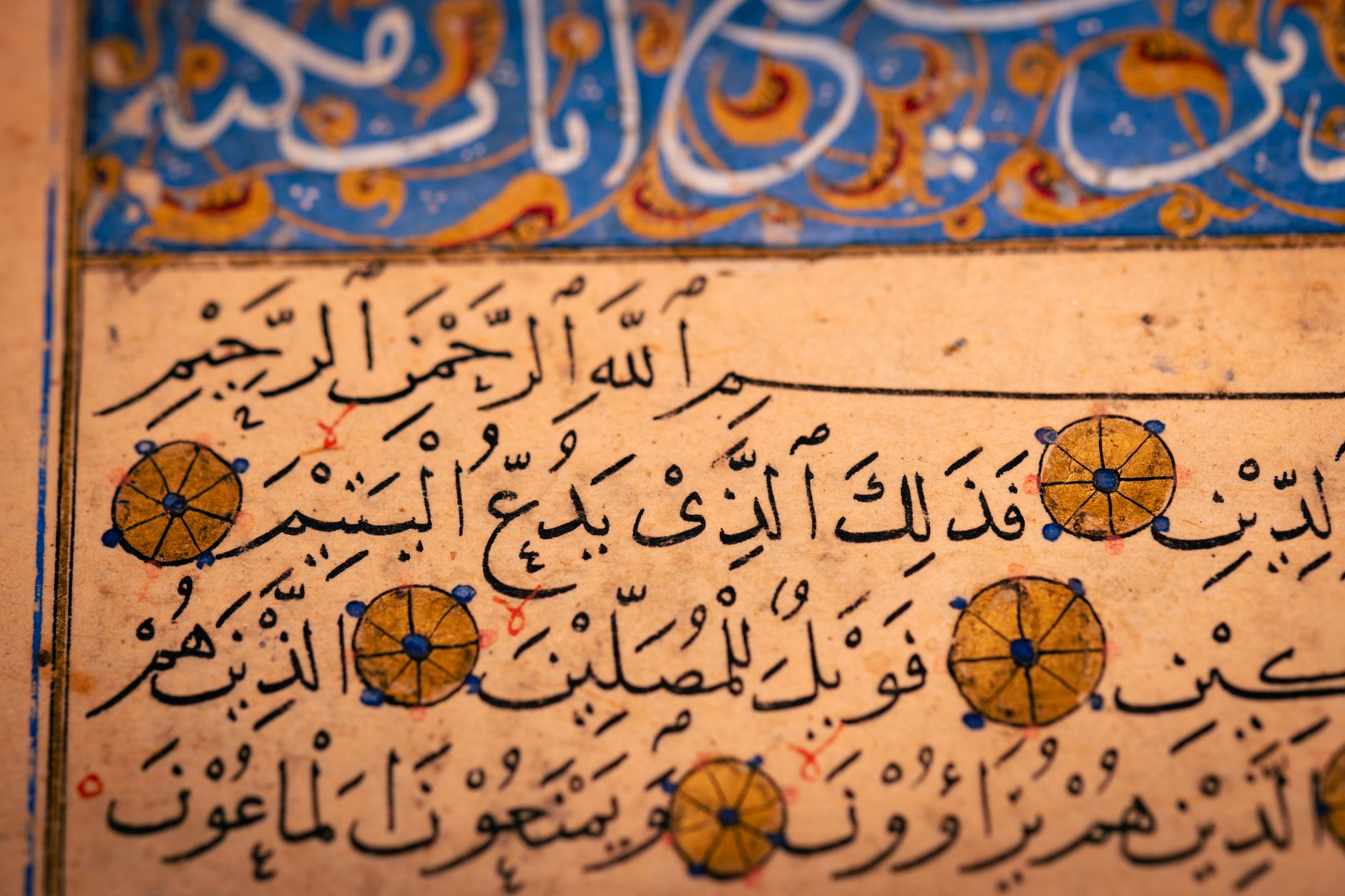
Long before fashion houses discovered the serif, script was the original mark of value. Illuminated manuscripts were commissioned by princes; a single decorated page could cost more than a house. Islamic art elevated calligraphy to the highest of the visual arts, precisely because the written word carried both beauty and meaning — a mosque wall covered in flowing Kufic or Thuluth script was, and remains, one of the most sophisticated design traditions humankind has produced. In East Asia, a scholar's brushwork was read as a portrait of his character. The hand revealed the man.
The West, too, coded status into letterforms. The copperplate of a wedding invitation, the engraved cursive on a banknote, the maker's name inked inside a bespoke suit — these were signals that something had been done properly, by hand, for you. Type was cheap; a beautiful hand was not. That distinction never really died. It just went quiet for a few decades while minimalism ran the show.
From Logomania to the Personal Line
Fashion's recent love affair with lettering is easy to trace. The 1980s and 90s gave us the logo as armour — Moschino's cheeky wordmarks, the all-over monograms that turned a bag into a billboard. The 2010s pushed it further: Off-White's now-famous quotation marks turned ordinary objects into captioned statements, Vetements printed courier delivery slogans across sweatshirts, and Gucci under Alessandro Michele revived a swooping vintage script that felt plucked from a 1970s hotel matchbook. Dior's cursive logo, Balenciaga's blunt sans-serif — for a while, reading someone's outfit was a literal activity.
But there's a difference between a brand shouting its own name and a man choosing his own words. The most compelling version of this trend is the second one. When lettering becomes personal — a family name, a wedding date, a line of poetry, a phrase in a mother tongue — it stops being marketing and becomes something closer to a tattoo: intimate, permanent, worn against the body. That is the register calligraphy now occupies at the top of luxury, and it is a far more grown-up place than a logo-covered belt.

Why Shoes Are the Perfect Canvas
Of all the surfaces a man owns, footwear is a surprisingly good place for a written line. The leather is smooth and continuous. The scale is intimate — you notice it up close, not from across a room. And crucially, a shoe is already an object built by hand, stitch by stitch, so an additional layer of artistry doesn't feel like a gimmick. It feels like an extension of the making.
This is where crust leather earns its place in the conversation. Crust is untreated, undyed hide — a blank surface that a craftsman colours and finishes by hand, building up patina in layers the way a painter works oil onto canvas. On such a surface, script isn't a stamp pressed on at the end; it can be worked into the finish itself, shaded and burnished so the letters sit in the leather rather than on top of it. The result reads less like branding and more like an inscription.

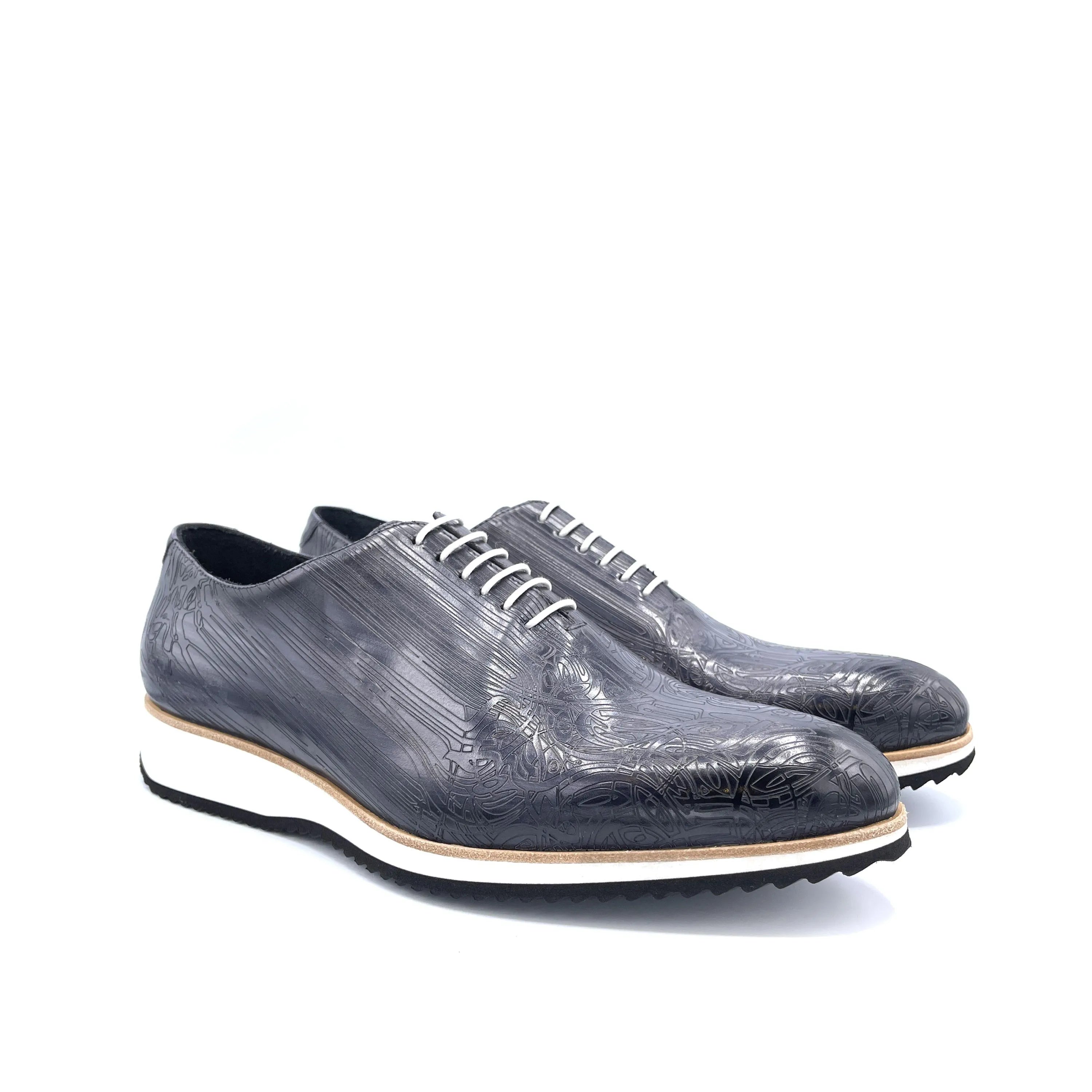
Que Shebley's Script Two Patina Wholecut is a clear example of the idea done with restraint. It takes the wholecut — a dress shoe cut from a single piece of leather, arguably the purest silhouette in the men's canon — and lets Arabic calligraphy travel across a hand-graded grey patina. The choice of a wholecut matters here: because the upper has almost no seams to interrupt it, the whole shoe behaves like a page. The script has room to breathe, and the grey ground gives it the quiet, gallery-wall backdrop that keeps the effect elegant rather than loud.
How to Wear the Written Word Without Overdoing It
The risk with any ornamented shoe is obvious: it can tip from expressive into costume. The men who carry it off treat the lettering as the loudest thing they're wearing and build quiet around it. A few working principles:
- Let the shoe be the sentence. If your footwear is carrying script, keep the rest of the outfit in plain, tonal cloth — charcoal, navy, stone. No competing patterns fighting for attention below the ankle.
- Meaning over decoration. A line that means something to you — a name, a date, a word in your own language — ages far better than a phrase chosen because it looked good. You'll wear it longer.
- Mind the register. Calligraphy on a sleek wholecut reads as considered. The same idea on a chunky or casual shoe can look like merchandise. Keep the base shape formal and the effect stays sophisticated.
- Trust the hand, not the machine. Hand-finished script has slight variation and depth; printed lettering looks flat and cheap up close, which is exactly where a shoe gets read.
An Old Idea, Newly Confident
What makes the current moment interesting isn't that lettering exists in fashion — it always has. It's that men are reclaiming it as something personal rather than promotional. The monogram is being reimagined not as a house's initials but as your own words; the inscription is moving from the inside of the jacket to a place where the world can, if it looks closely, read it.
There is something fitting about all this landing on shoes. The written word began as a way to make the fleeting permanent — to fix a name, a promise, a prayer. A well-made pair of shoes does something similar for the way a man moves through the world. Put the two together, and you get an object that carries meaning at exactly the height where, over dinner, a man might turn his foot to the light and let it be seen.

Leave a comment
This site is protected by hCaptcha and the hCaptcha Privacy Policy and Terms of Service apply.