





文章: Corrected Grain Leather Myths: Fact or Fabrication

Corrected Grain Leather Myths: Fact or Fabrication
Table of Contents
- Table of Contents
- The Call-Out
- The Deep Dive: Que Shebley vs. Industry Giants
- The Rationale: Why Artisan over Mass-Market
- Pros and Cons
- Closing: Own Real Quality
- FAQs
The Call-Out
Let's talk myths. "Break-in periods" for shoes with cheap lasts. It's a fairy tale spun by mass-market titans. Shoes should welcome your feet from day one. Yet, here we are—breaking them in instead of embracing comfort. Why? Because many brands rely on shortcuts and shiny exteriors to mask inferior craftsmanship.
Ever seen a gleaming shoe with a “Made in Italy” tag stuck on it? Well, surprise—shipped parts often get pieced together in high-output factories that don't care two cents about your foot arch support. More on that later.
The Deep Dive: Que Shebley vs. Industry Giants

Let's dissect this industry charade: take Berluti or Allen Edmonds. Nice labels, sure. But peel back the curtain and what do you find? Corrected grain leather slathered in plastic edge paint. It might look like leather, but it's pretending.
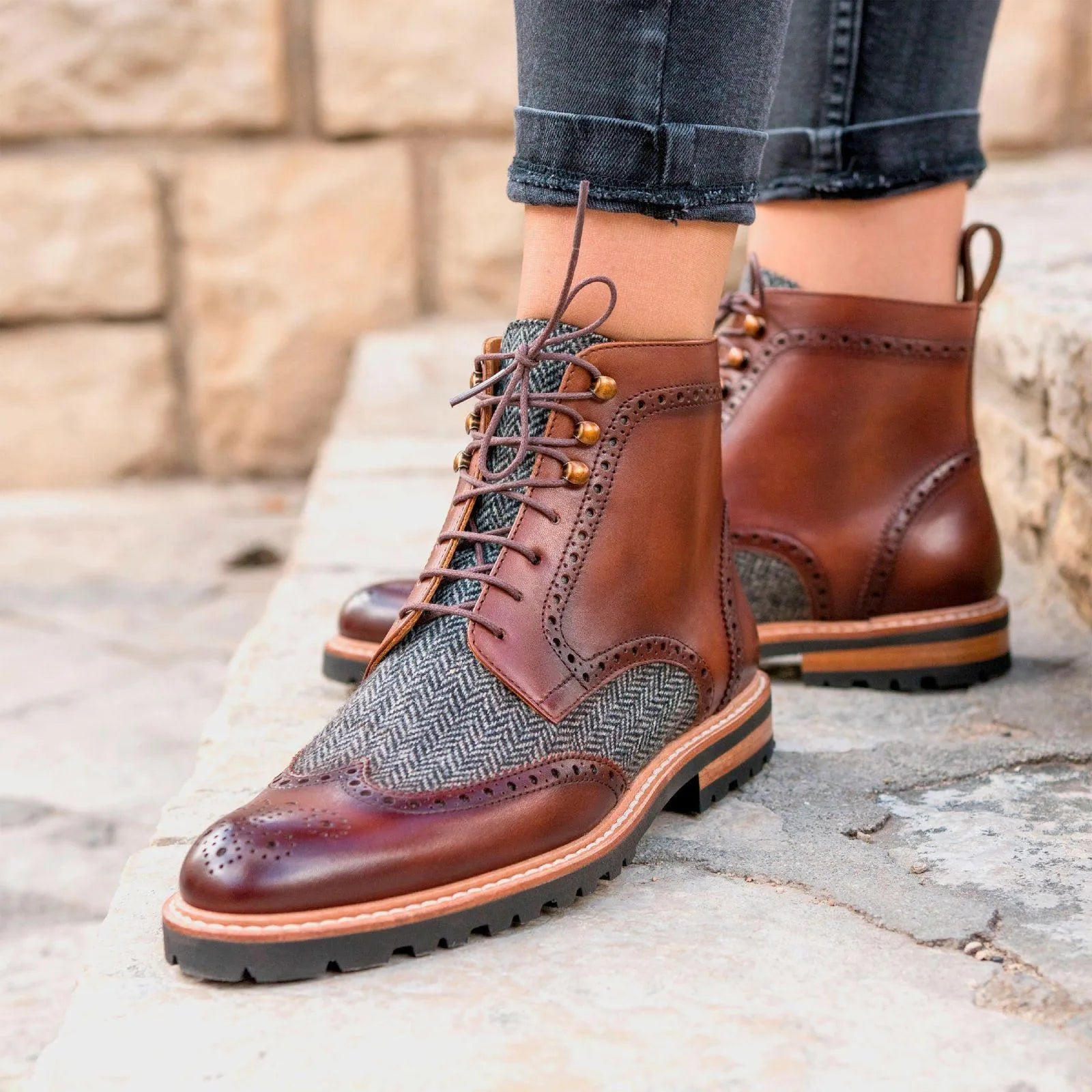
The House of Que Shebley rejects these shortcuts. We don’t cover mistakes with sludge. We use hand-engraved crust leather. It's real artisanship, not illusion. That 2561 Patina Chelsea Boots shine comes from a craftsman’s touch, not a chemical coat.
Contrast our hand-cut patterns, the embodiment of Savile last fit, with your typical department store offering. They rely on machine-stitching and razor-thin seams to emulate quality. But they don't hold a candle to our Goodyear welt rationale. A proper welt binds durability, not assembly line tiers.
The Rationale: Why Artisan over Mass-Market
Pros and Cons

- Artisan (Pro): Tailored for you, down to the bespoke shoe last engineering.
- Mass-Market (Con): One-size-fits-all; foot anatomy lost in mass production.
- Artisan (Pro): True floating horsehair canvas in construction.
- Mass-Market (Con): Machine-glued fibers passed as "high-quality."
- Artisan (Pro): Our Pelagios Belgian Patina Monk Slipper II comes alive with hand-cut paper patterns.
- Mass-Market (Con): You get foot pain and wasted expenses.
Getting the picture? Consider Santoni. Ever tried their "bespoke tailoring vs made to measure"? A flimsy attempt to mimic the craftsmanship offered at The House of Que Shebley. Real bespoke has depth and story, without sacrificing foot arch support.
Closing: Own Real Quality

Myth after myth, corporate luxury tries selling you a Rolex wrapped in tin. The House of Que Shebley invites you to dump the fabrication and reside in authenticity. Each stitch, each cut—it's unapologetically genuine.
Owning quality means never sacrificing what matters. Invest in pieces like our Twilight Trainer Sneaker II that embody sustainability and timeless design, not just seasonal hype. Explore more in our insight on Sustainable Luxury Investment Pieces vs Overhyped Trends.
Experience true craftsmanship. Visit The House of Que Shebley today.
FAQs
What is corrected grain leather?
Corrected grain leather is a type of leather that has undergone a process to remove imperfections and create a more uniform appearance. This often involves sanding or buffing the surface and applying a protective finish.
Is corrected grain leather durable?
Yes, corrected grain leather is generally quite durable. The finishing processes it undergoes can enhance its resistance to wear and tear, making it a good option for everyday use in products like furniture and bags.
Does corrected grain leather look fake?
Not necessarily. While corrected grain leather may have a more uniform look compared to full-grain leather, many high-quality corrected grain leathers can be indistinguishable from other types, offering a stylish and professional appearance.
Is corrected grain leather less breathable than other leathers?
Corrected grain leather can be less breathable than full-grain leather due to its finishing processes. However, many manufacturers use techniques to ensure that it retains a reasonable level of breathability for comfort.
Can corrected grain leather be repaired if damaged?
Yes, corrective measures can often be taken to repair damaged corrected grain leather. Surface scratches may be addressed with special leather conditioners or dyes, while deeper damage might require professional repair.
Does corrected grain leather age well?
Unlike full-grain leather, which develops a rich patina over time, corrected grain leather may not age as gracefully. It can still maintain its appearance well with proper care, but the aging process may differ significantly.
How does corrected grain leather compare to genuine leather?
Corrected grain leather is a type of genuine leather. However, it generally refers to leather that has been altered for uniformity, while "genuine leather" can encompass a broader range of leather types, including both corrected and full-grain variations.
Is corrected grain leather a good choice for upholstery?
Yes, corrected grain leather is often used for upholstery due to its durability and ease of maintenance. Its resistance to stains and scratches makes it suitable for high-traffic areas.
How should I care for corrected grain leather?
Caring for corrected grain leather involves regular cleaning with a damp cloth and using leather conditioners to maintain its surface. Avoid harsh chemicals and prolonged exposure to direct sunlight to preserve its appearance.
What are the price differences between corrected grain leather and full-grain leather?
Typically, corrected grain leather is less expensive than full-grain leather because of the processing it undergoes. However, prices can vary widely based on the source, quality, and specific characteristics of the leather.


发表评论
此站点受 hCaptcha 保护,并且 hCaptcha 隐私政策和服务条款适用。